From Policy to Practice: Building Strong Early Years Systems
In many education systems, early years education is surrounded by powerful language: policy frameworks, national visions, curriculum standards, and reform agendas. Documents are carefully written, strategies are announced, and expectations are clearly articulated. Yet the real test of any early years system can be observed in a much simpler moment:
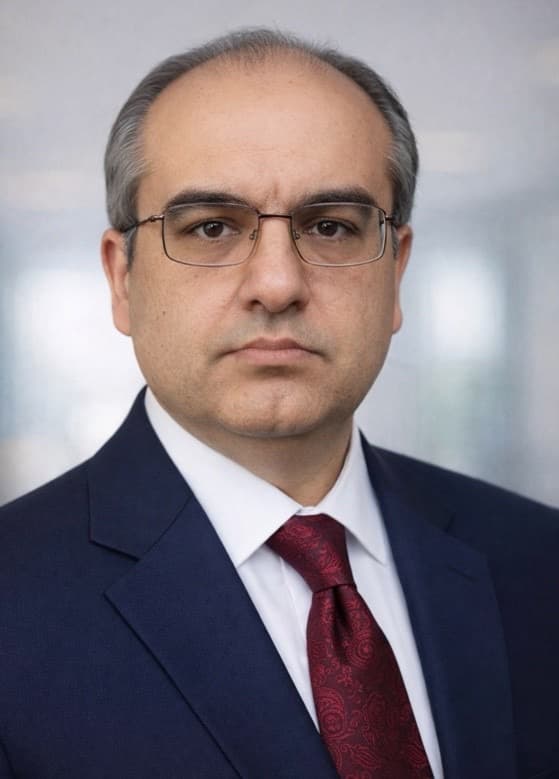
Dr. Omar H. Al Faqir
Ministry of Education, United Arab Emirates

What actually happens in the classroom with a four-year-old child on an ordinary Tuesday morning?
The strength of early childhood education is not determined by the sophistication of policy documents, but by the degree to which those policies shape everyday experiences for children. Moving from policy to practice is therefore not merely an implementation exercise. It is a system-building challenge, one that requires alignment between policy design, curriculum interpretation, professional capacity, school leadership, and the quality assurance mechanisms that monitor practice.
From an inspection perspective, this alignment is often where systems succeed, or struggle.
Across many school visits and evaluations, one consistent observation emerges: the distance between policy and practice can be surprisingly wide. Schools may demonstrate full compliance with frameworks and documentation, yet the learning experiences observed in classrooms may not fully reflect the spirit of those policies. This is why inspection plays a critical role, not as a compliance exercise, but as a lens that examines how system intentions translate into children’s learning experiences.
Policy Must Define the “Why” of Early Learning
Effective early years policy must do more than outline standards. It must articulate a clear philosophy of childhood learning.
Many systems unintentionally create tension between academic readiness and developmental appropriateness. On one side, there is pressure to accelerate formal instruction in literacy and numeracy. On the other, there are approaches that promote play without sufficient intentional learning design.
Strong early years systems avoid this false choice.
They define early learning as intentional, play-based development, where exploration, language, relationships, and curiosity form the foundation of later academic success. Policy must therefore answer three fundamental questions:
What kind of learners do we hope to develop?
What experiences should children encounter each day?
What role should adults play in shaping those experiences?
Inspection often reveals that when these questions are clearly answered at the system level, schools are far more likely to implement early years programs with confidence and coherence.
Curriculum: The Bridge Between Vision and Practice
If policy defines the philosophy, curriculum translates that philosophy into daily action.
In strong early years systems, the curriculum is not merely a list of learning outcomes. It is a developmental roadmap that helps educators design meaningful, integrated learning experiences.
An effective curriculum should:
Provide developmentally appropriate expectations for children aged three to six.
Encourage integrated learning where language, creativity, inquiry, and social development reinforce each other.
Allow flexibility so teachers can respond to children’s interests and emerging curiosity.
Emphasize language-rich environments that nurture thinking and communication.
However, inspection evidence often shows that curriculum strength depends less on its design and more on how educators interpret it. A well-structured framework can easily be reduced to worksheet-driven instruction if teachers are unsure how to translate its intentions into practice.
This is where classroom observation becomes essential. During inspections, evaluators often see that the most effective early years classrooms are not those that strictly follow activities, but those where teachers skillfully extend children’s thinking through dialogue, questioning, and exploration.
Teachers: The Most Powerful Lever in the System
No early years reform succeeds without investing deeply in teacher expertise.
Working with young children requires a highly sophisticated form of pedagogy. Early years educators must observe developmental signals, facilitate exploration, support emotional wellbeing, extend language, and scaffold thinking, often simultaneously.
Inspection repeatedly shows that the quality of early years education is strongly influenced by the nature of adult-child interactions.
In classrooms where learning thrives, teachers:
Listen carefully to children’s ideas.
Extend conversations beyond simple responses.
Encourage curiosity and problem-solving.
Provide a balance between guided learning and child-initiated exploration.
Interestingly, the difference between average and outstanding early years provision rarely lies in the resources available. It lies in how teachers interact with children and shape learning moments.
For this reason, strong systems invest not only in training but in continuous professional dialogue,through coaching, reflective practice, and collaborative learning among educators.
Inspection as a Mirror for System Quality
One of the most important contributions of inspection is its ability to provide a system-level mirror.
Inspection evidence does not only evaluate individual schools; it reveals patterns that can inform policy refinement and professional development priorities. When multiple inspections highlight similar challenges,such as overly formal instruction in early years or limited language interaction—it signals a need for system-wide support and guidance.
Equally important, inspection can highlight examples of exceptional practice that serve as models for others.
In this way, inspection becomes more than an accountability mechanism. It becomes part of a continuous feedback loop between policy, practice, and improvement.
Leadership: The Often Overlooked Factor
Strong early years provision rarely emerges by accident. It requires leadership that understands the unique nature of early childhood learning.
In some schools, early years programs are treated as isolated units rather than integral foundations of the learning journey. However, effective school leaders recognize that early childhood education shapes children’s attitudes toward learning long before academic expectations intensify.
Leaders play a critical role in:
Protecting developmentally appropriate practice.
Supporting teachers through coaching and reflection.
Creating environments where curiosity and wellbeing are valued.
Ensuring smooth transitions from early years into primary education.
Inspection frequently confirms that when school leaders deeply understand early childhood education, the quality of practice improves significantly.
Measuring What Truly Matters
Ultimately, the strength of an early years system can be observed through a simple but powerful question:
What are children experiencing each day in their learning environments?
Inspection shifts attention away from documentation and toward the lived experiences of children. Are they engaged? Are they asking questions? Are they developing confidence, language, and curiosity?
Policies may establish direction, and curricula may outline pathways. But strong systems are built when those frameworks translate into daily experiences that nurture capable, confident young learners.
Moving from policy to practice therefore requires alignment across the system—supported by thoughtful leadership, skilled educators, and inspection processes that focus on what truly matters.
Because in early childhood education, the real measure of success is not found in policy documents.
It is found in children’s voices, curiosity, and growing confidence as learners.
Dr. Omar H. Al Faqir
Ministry of Education, United Arab Emirates
Dr. Omar H. Al Faqir is an experienced educational leader and quality assurance specialist with a strong track record within the Ministry of Education. His work focuses on strengthening teaching practice, system alignment, and leadership capacity to drive meaningful learning outcomes. Known for his strategic insight and commitment to excellence, he brings a systems-level perspective to improving early years education and school performance.
LinkedIn